
Mexico City Day of the Dead: What Tourists Get Wrong (And How To Do It Right)
If you’re planning to experience a Mexico City Day of the Dead celebration, man are you in for a treat. I spend about 5 months a year in CDMX, and Día de los Muertos (which mostly happens on Nov 1 and 2) is one of the absolute best times of the year to visit.
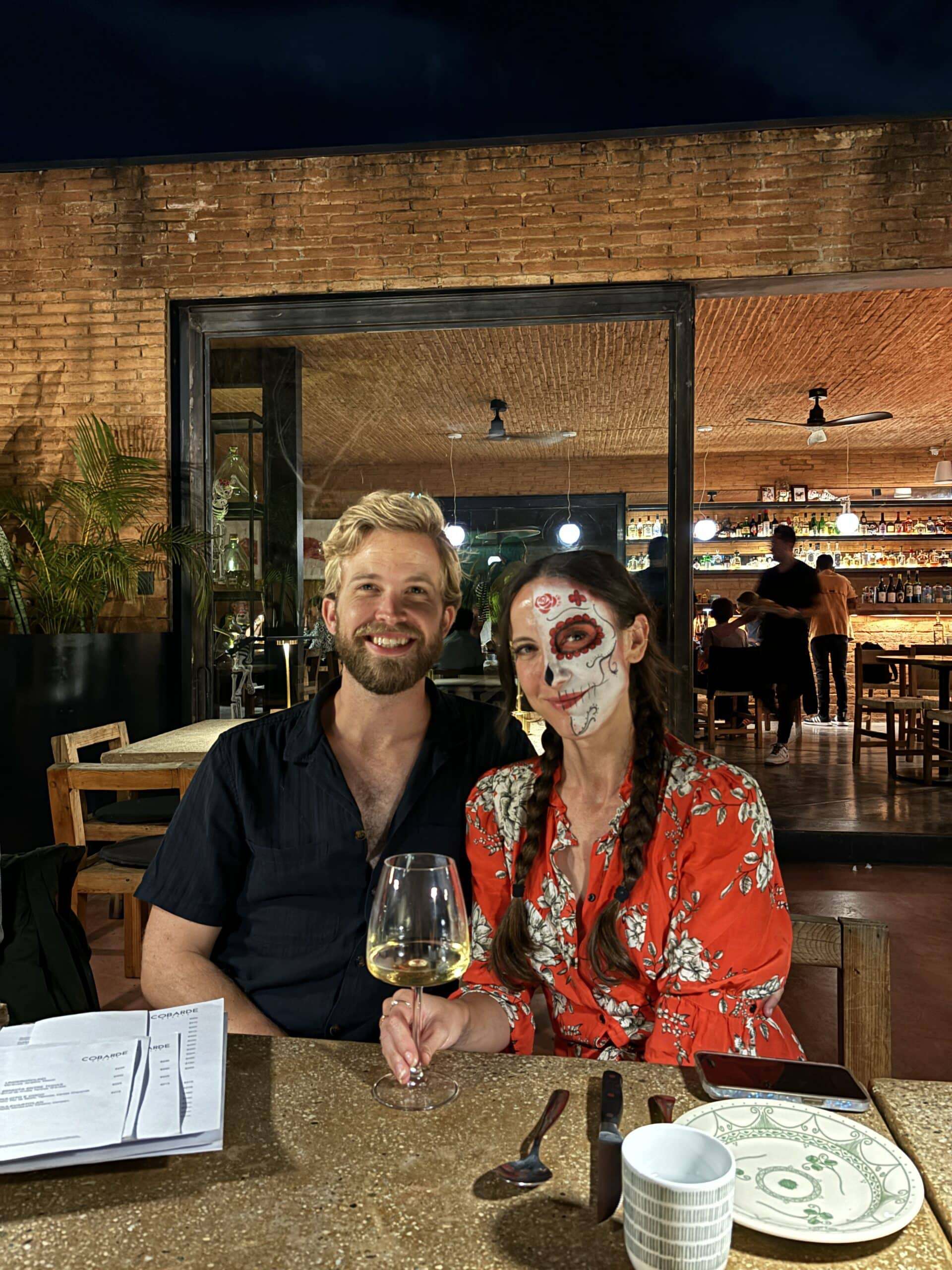
You’ll see incredible parades, gorgeous ofrendas, and you should definitely get a Catrina (skeleton) face paint from a local!
Before I went for the first time, I had tons of questions on “how to do it right” and “how to do it respectfully“. So if you’re wondering what the events are, how to see the best parades, which of the gorgeous boutique hotels throughout the city you should stay in, or what food you should constantly be eating (“pan de muerto” is just unmissable), you’re not alone!
Don’t worry, I’ve got every detail covered in this guide (including local insider tips and tricks!) so you can experience the perfect Day of the Dead in Mexico City.
Mexico City Day of the Dead: Quick Guide
Running short on time? Here’s a quick guide of what do during the Day of the Dead Mexico City. There are way more recommendations in this article, these are just the quick hits!

When and Where is Day of the Dead in CDMX?
- When: November 1-2 (with events starting late October)
- Main Parade Date (2026): November 1, 2026
- Parade Route: Chapultepec Park to Paseo de la Reforma to Avenida Juárez to Zócalo
- Guided tour here if you want an immersive experience!
Other Great Activities in Mexico City
- If I had to choose, I’d make time for Lucha Libre, the Teotihuacan Pyramids, and a food tour.
Where to Stay in Mexico City
- You want to anchor in the Roma Norte and Condesa neighborhoods, I particularly love the Brick hotel and the Andaz hotel with a pool.
Before we dive in, I also share my personal, Google map of my favorite spots in CDMX with all Inside the Upgrade readers for free. There are restaurants, bars, museums, bakeries – all my local go-to’s. Enjoy!
When Is Mexico City Day of the Dead in 2026?
Día de los Muertos is officially observed on November 1 and 2 each year (so yes, after Halloween). In Mexico City, though, the events usually kick off in the last week of October and runs through November 3.
The 2026 Grand Parade is scheduled for November 1, starting in the early afternoon. The official parade details (including confirmed dates, times, and any route changes) get published on Visit Mexico (visitmexico.com), which is where I’d check as you get closer. Historically the route starts near Chapultepec Park and ends at the Zócalo, but it’s worth double-checking.
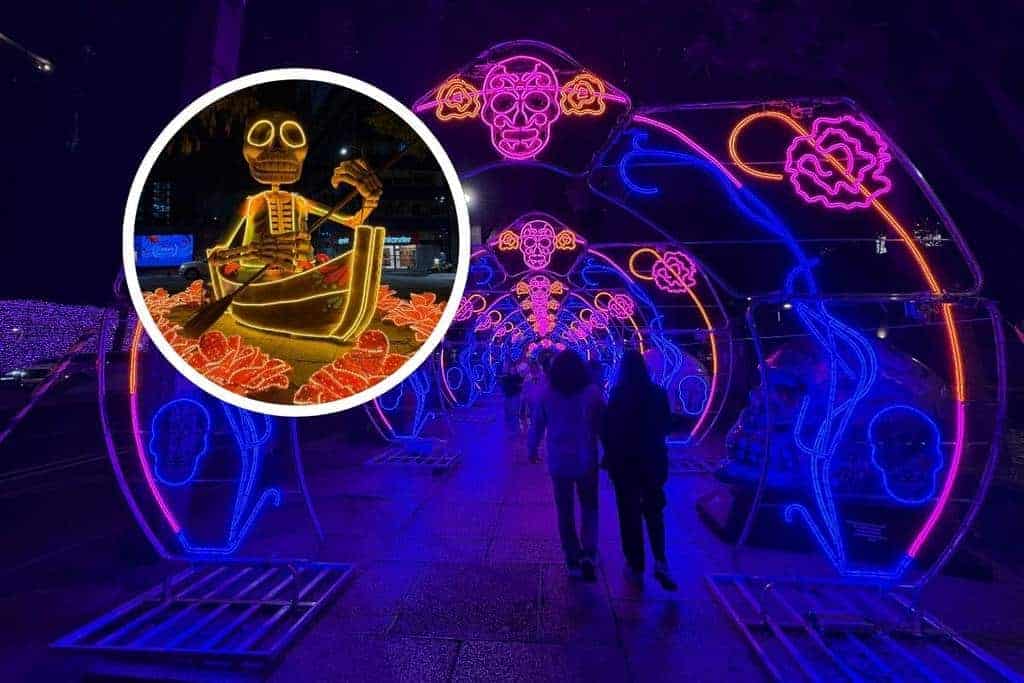
If you can swing it, plan to arrive in CDMX by the last weekend of October. The city starts filling up with altars, exhibitions, and events that you’ll genuinely miss if you only show up on November 1st.
Wait, The Parade Didn’t Always Exist?
Fun fact: the Grand Parade wasn’t a thing until 2016. The opening scene of the James Bond film Spectre (2015) was filmed in Mexico City with a fictional Day of the Dead parade, and the Mexican government liked the idea so much they just… made it a real event.
The first actual parade drew 250,000 people.
Now it’s one of the biggest annual events in the country. Only in Mexico 🙂
This Is Not Halloween
Honestly, I didn’t fully know what to expect my first time. Día de los Muertos is not Halloween. It’s not spooky, it’s not costumes of random scary things, and it’s not candy in buckets.
It’s a beautiful mix of ancient Aztec traditions and Spanish Catholic influences that dates back thousands of years. The whole idea is that the gates to the spiritual realm open at midnight on October 31, letting the spirits of children rejoin their family members.
The spirits of adults follow on November 1, and everyone gathers together on November 2 to honor their loved ones.
It’s a celebration of life, death, and family, and one of the most meaningful expressions of Mexican culture you’ll ever see. You feel it everywhere in the city, and once you’re in it, you understand why its particularly magical and ethereal compared to Halloween.
💡 Watch Disney’s Coco before you go! 1000% recommend – it will help you understand the history and make everything so much richer when you’re actually there!)
What Happens at Mexico City Día de los Muertos: What You’ll See
The Day of the Dead in Mexico City is subtle at first. You start noticing it before the main events even begin. Pan de muerto (more on this later) starts appearing in every bakery window. Marigolds show up on restaurant tables. An ofrenda in your local café with candles and photos and little offerings will pop up.
The Grand Day of the Dead Parade
This is the main event. Giant skeleton puppets moving through the air, enormous Catrina floats, live music, costumed performers, and tens of thousands of people celebrating along Paseo de la Reforma for the Muertos parade. It is loud, colorful, and genuinely one of the coolest things I’ve seen in all my time in CDMX.
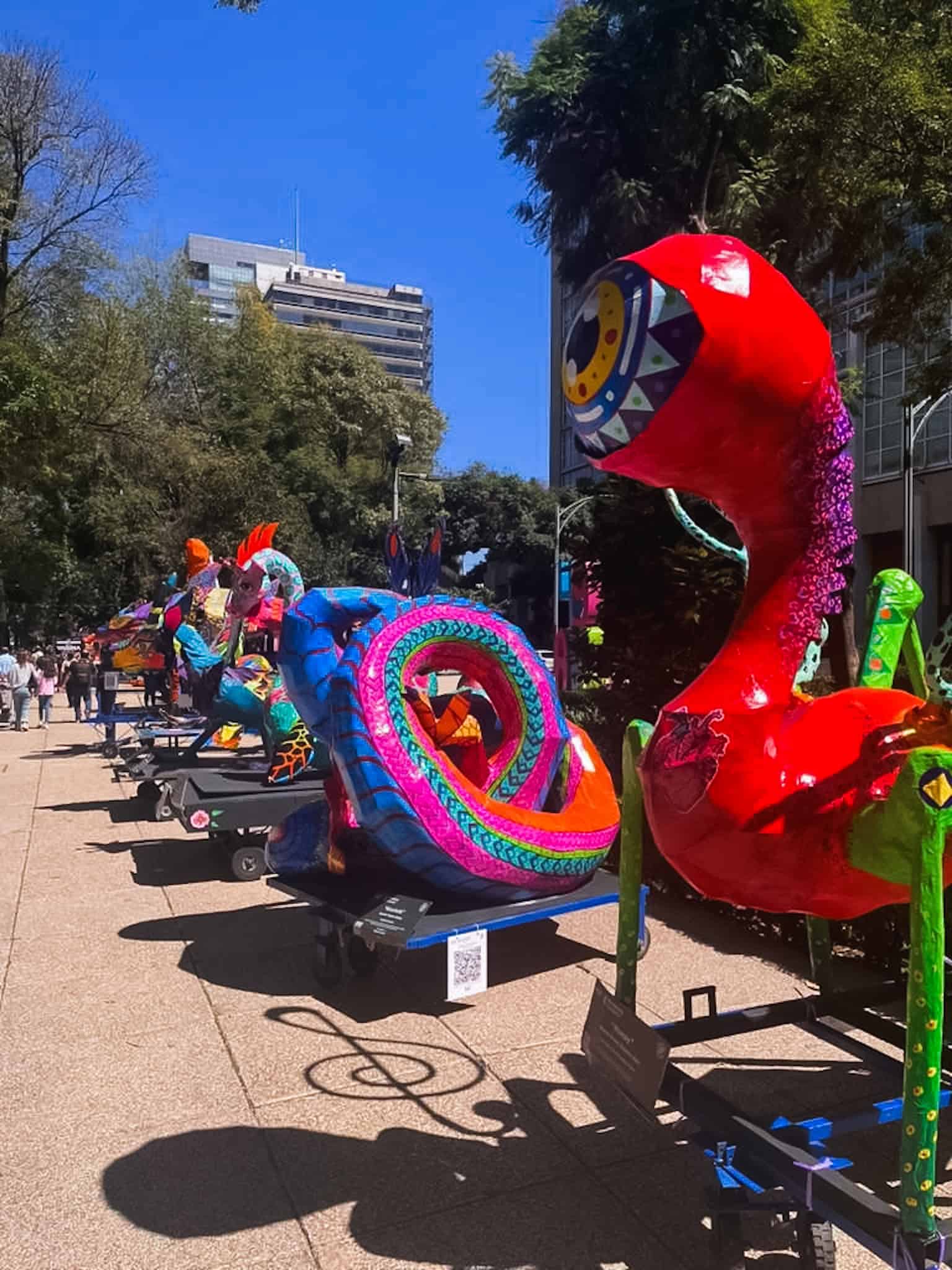
Heads up: keep your eyes open and stay aware of what’s moving around you when those giant puppets and floats go by. Things get close and my friend got hit in the face (which was hilarious, but still)! It’s all part of the fun, but you’ll want to stay alert (pickpockets are very real…it’s why I have anti-theft bags like these on my CDMX packing list).
And get there early. Like, embarrassingly early. The crowds build fast and once the parade starts, crossing the route becomes pretty much impossible. Learn from my first time, when I showed up a little too late and spent most of the parade enjoying the vibe rather than the view 🙂
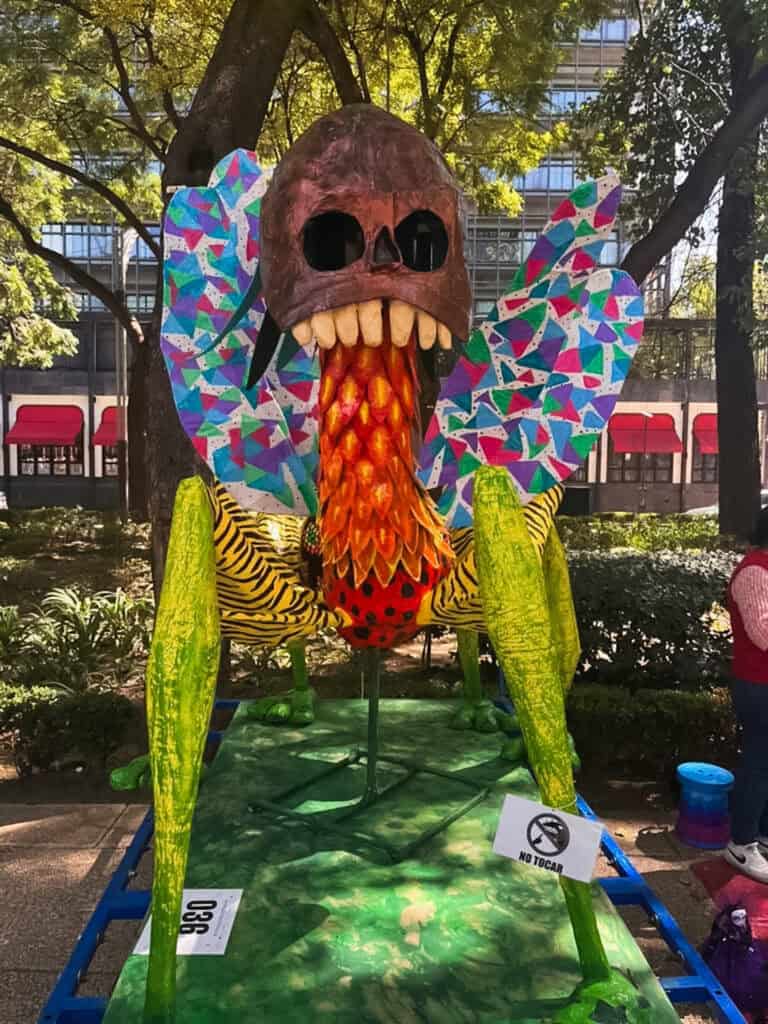
Alebrijes
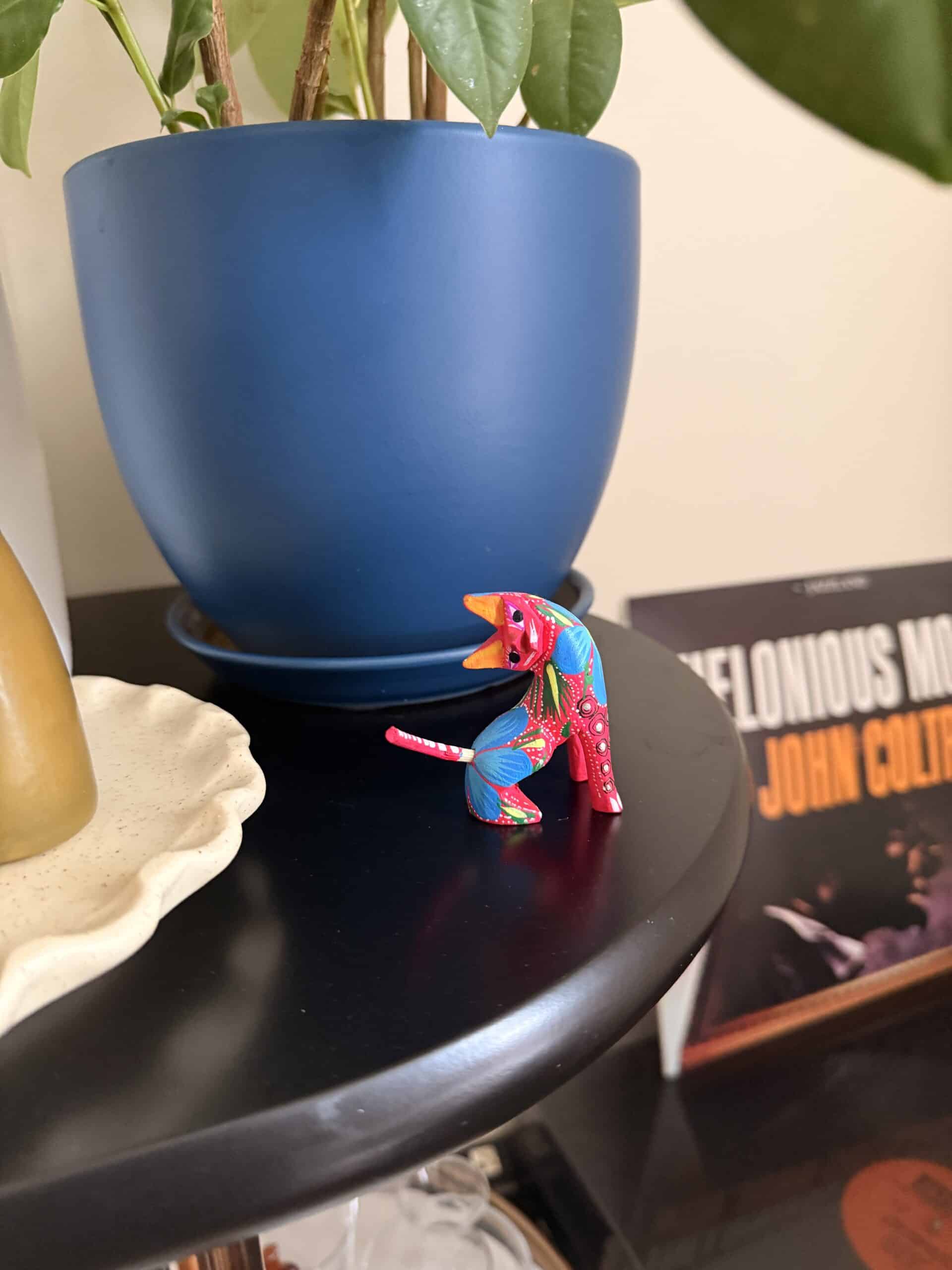
These are little animal spirit guides that help you into the afterlife! They’re often combinations of more than one animal and you’ll see them everywhere. There are giant ones (usually made of papier-mâché) and little souvenir ones that you can put on any counter. We bought one for ourselves and one each for our nieces and nephews 🙂
Ofrendas (Altars)
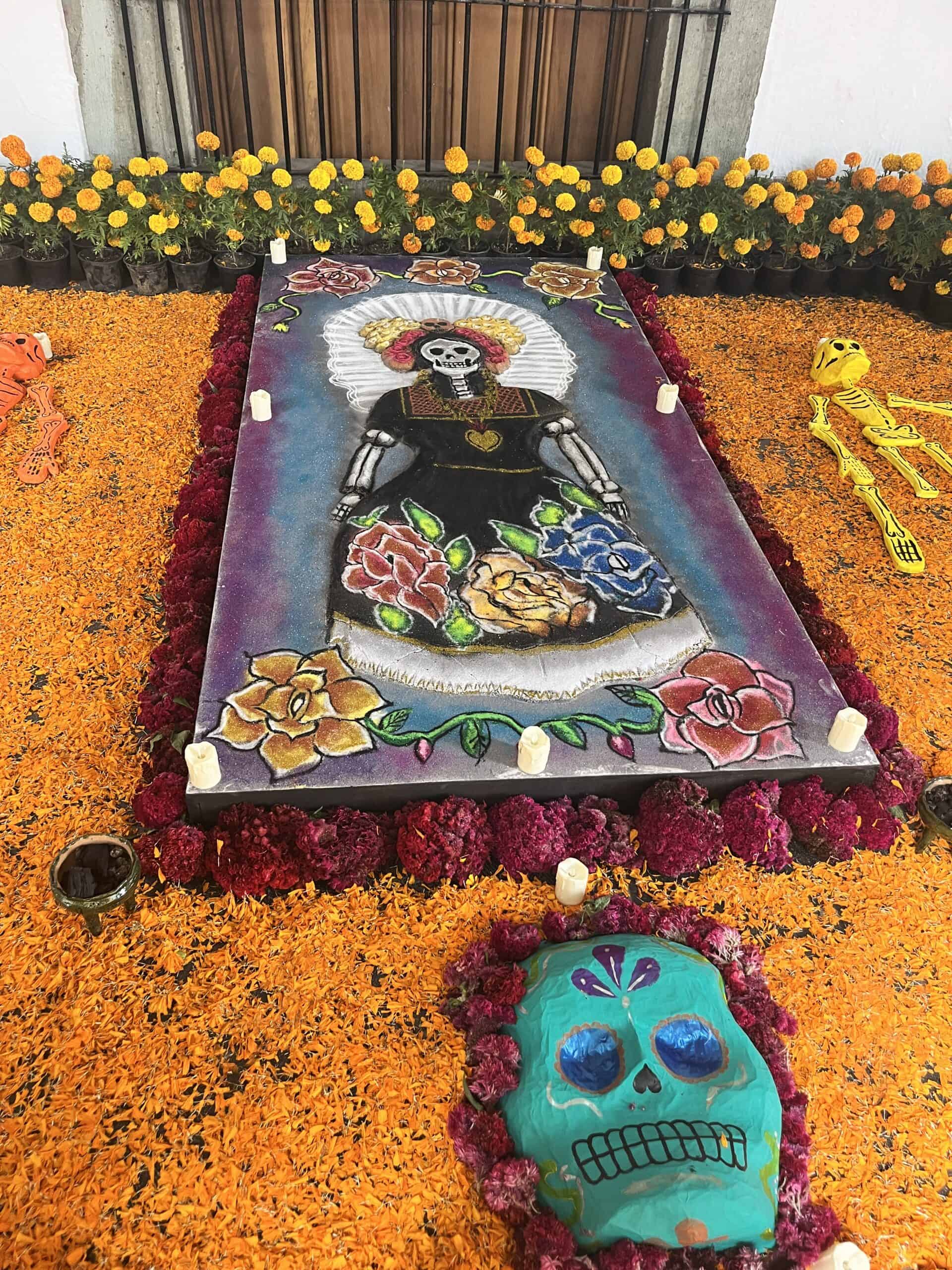
You’ll find ofrendas everywhere during Mexico City Día de los Muertos, from small ones tucked into restaurant corners to truly massive community displays. But it surprised me was how many there are outside of the main tourist areas.
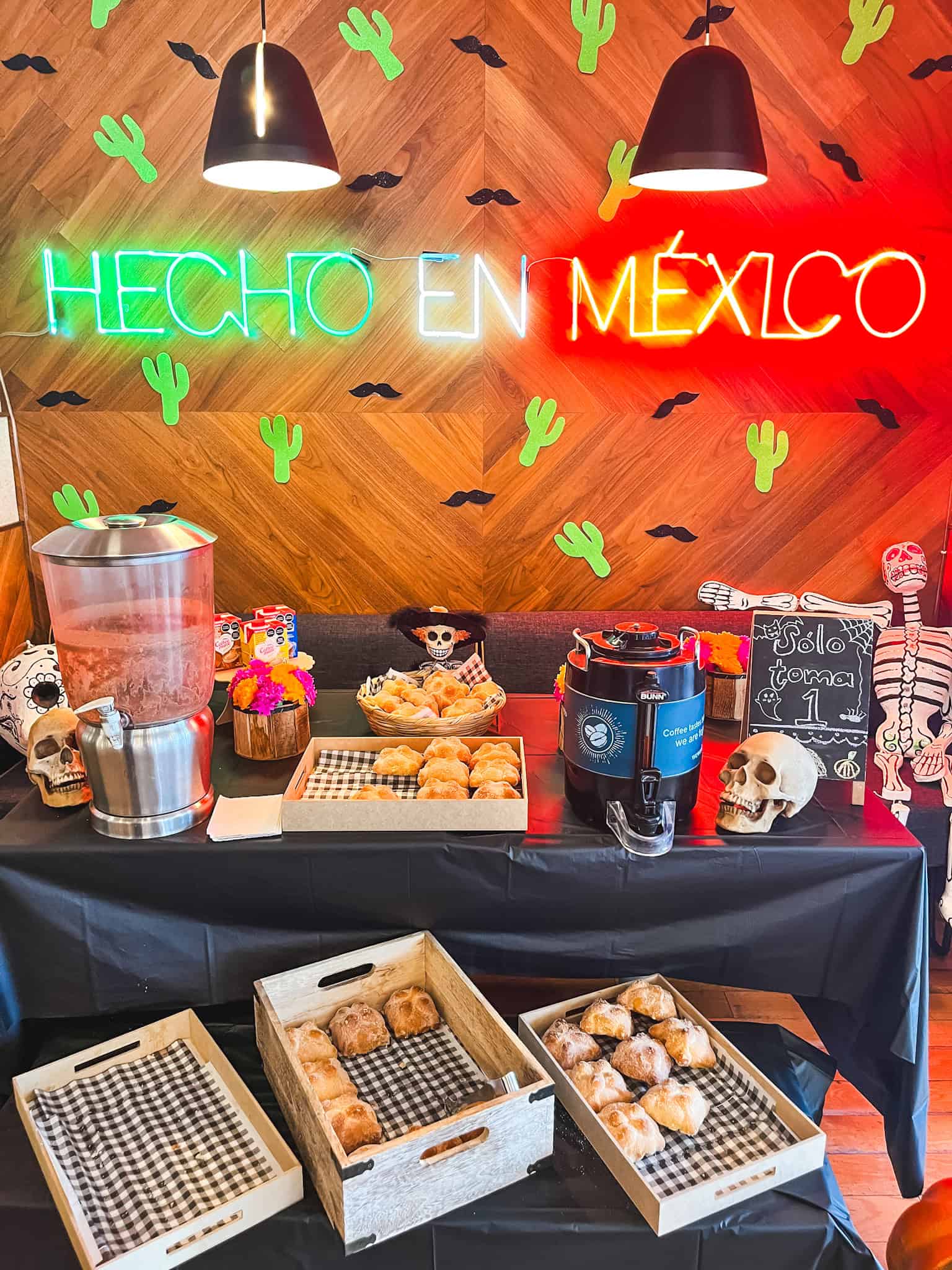
The coworking space I was working out of had a whole altar set up with decorations, candles, and offerings of favorite foods and drinks for the departed. It’s woven into daily life in a way that’s genuinely beautiful.
The Ofrenda Monumental in the Zócalo is the one you absolutely have to see. It’s enormous, covered in marigolds, candles, photos, and papel picado (the colorful perforated paper flags you’ll see strung everywhere), and so intricate I couldn’t even imagine the hours that go into building it.
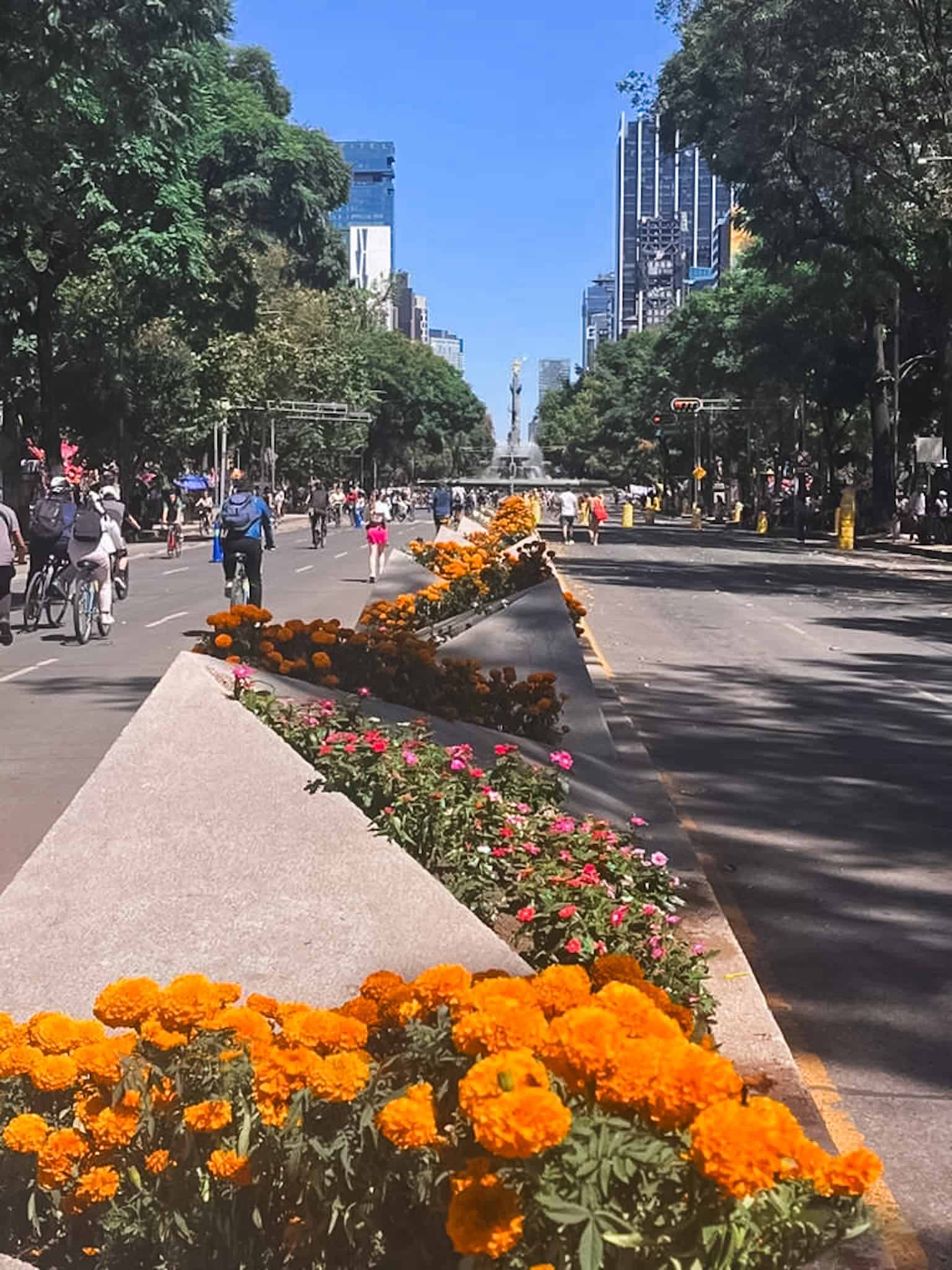
Marigolds (cempasúchil) are everywhere during the festival as their scent is believed to guide spirits home, which is why you’ll see orange petals literally blanketing entire altars and streets.
Catrina Face Paint
Do this! I’m a total sucker for face paint in general, but the Catrina (skeleton) face paint is something else. The artists you’ll find set up along the parade route and around the Zócalo are incredibly talented, and the detail they put into each one is way more impressive than anything I could ever manage myself.
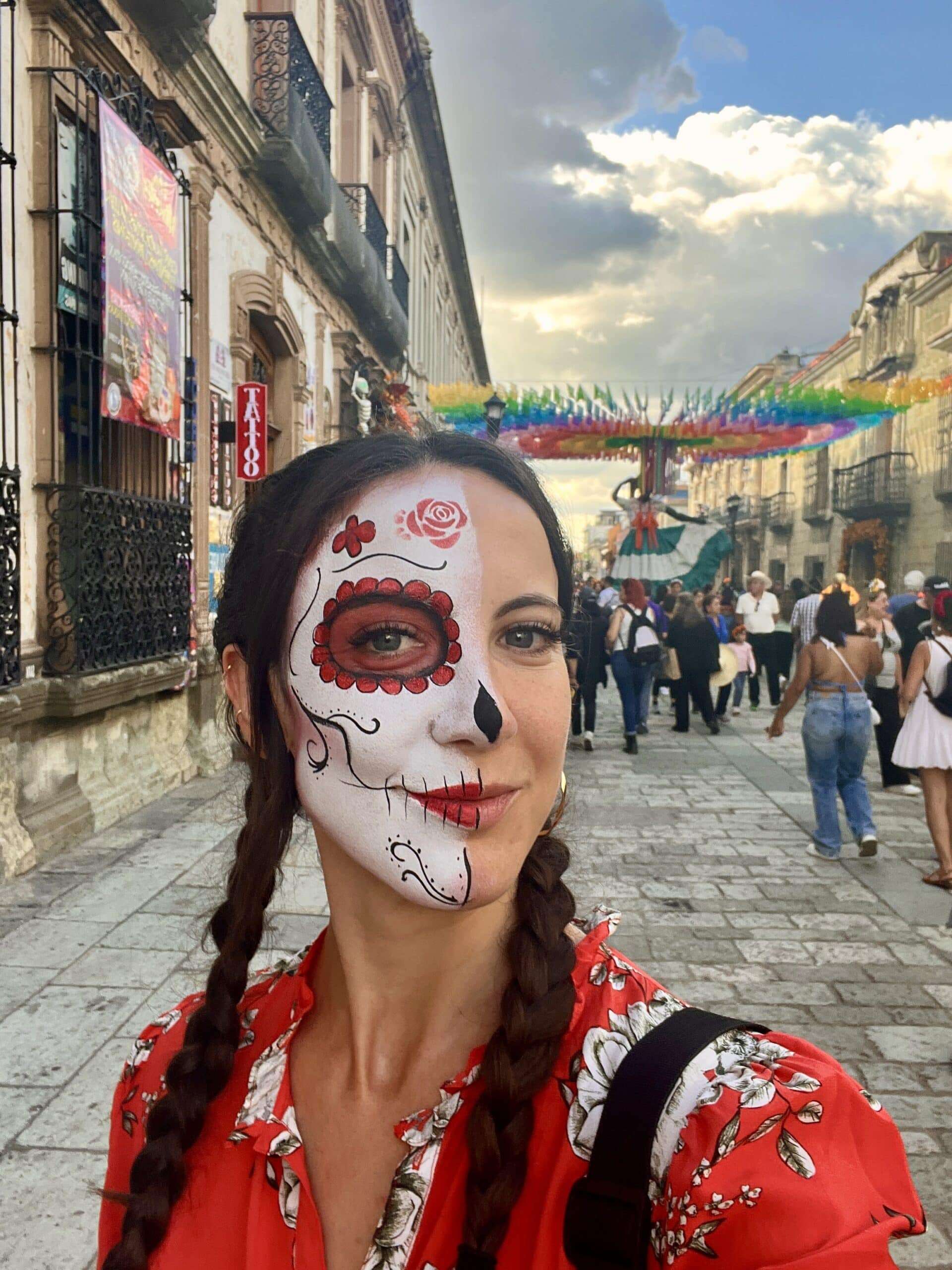
💡 My tip: do half your face, not the full thing. I thought it looked perfect, I had a lot of people stop and ask me where I got it done, and it’s a lot easier to wash off at the end of the night 😂 Bring cash.
The Giant Skeleton Puppets and Floats
These are hard to describe until you see them. Giant articulated skeleton figures moving through the air, enormous painted floats, massive Catrina sculptures. The artistry is stunning.

Where Are the Parades and Events?
Here’s where everything happens during Mexico City Day of the Dead:
The Main Dia De Los Muertos Parade Route in CDMX
The Grand Parade starts near Puerta de los Leones in Chapultepec Park, travels the length of Paseo de la Reforma, continues down Avenida Juárez, and finishes in the Zócalo.
Reforma (spot B on the map) is the prime viewing spot, and the Zócalo (spot c) is where the energy peaks at the end. After the parade, the floats and giant puppets are displayed in the Zócalo so you can get up close to everything you just watched roll by.
Zócalo / Centro Histórico
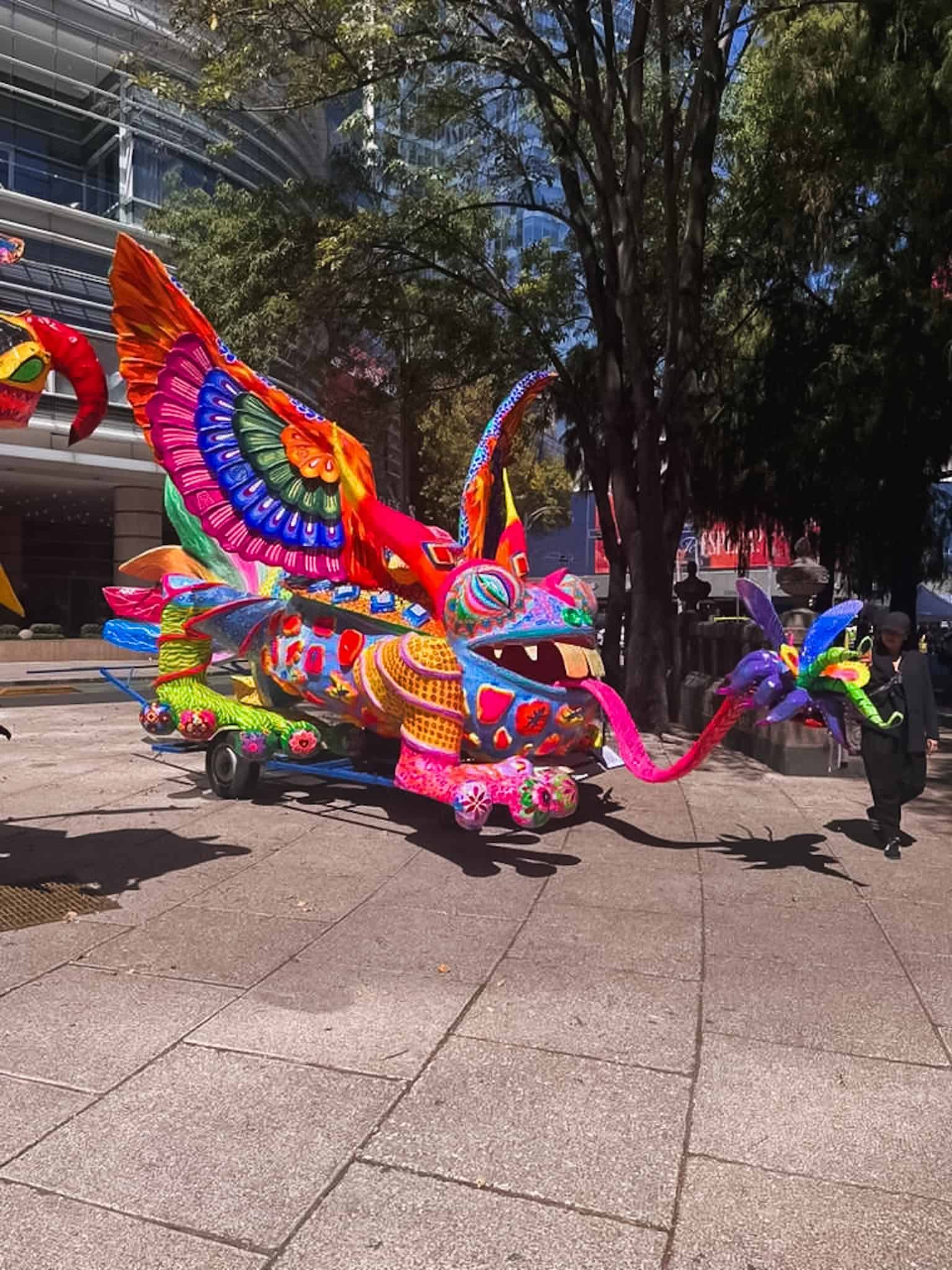
This is the heart of the festivities. The Ofrenda Monumental lives here, along with street celebrations, cultural programming, and more food vendors than you could ever get through (try anyway).
Centro is buzzy and crowded during the festival, so keep an eye on your belongings in tight crowds. My friends have been pickpocketed there before, so it’s real.
Coyoacán and Xochimilco
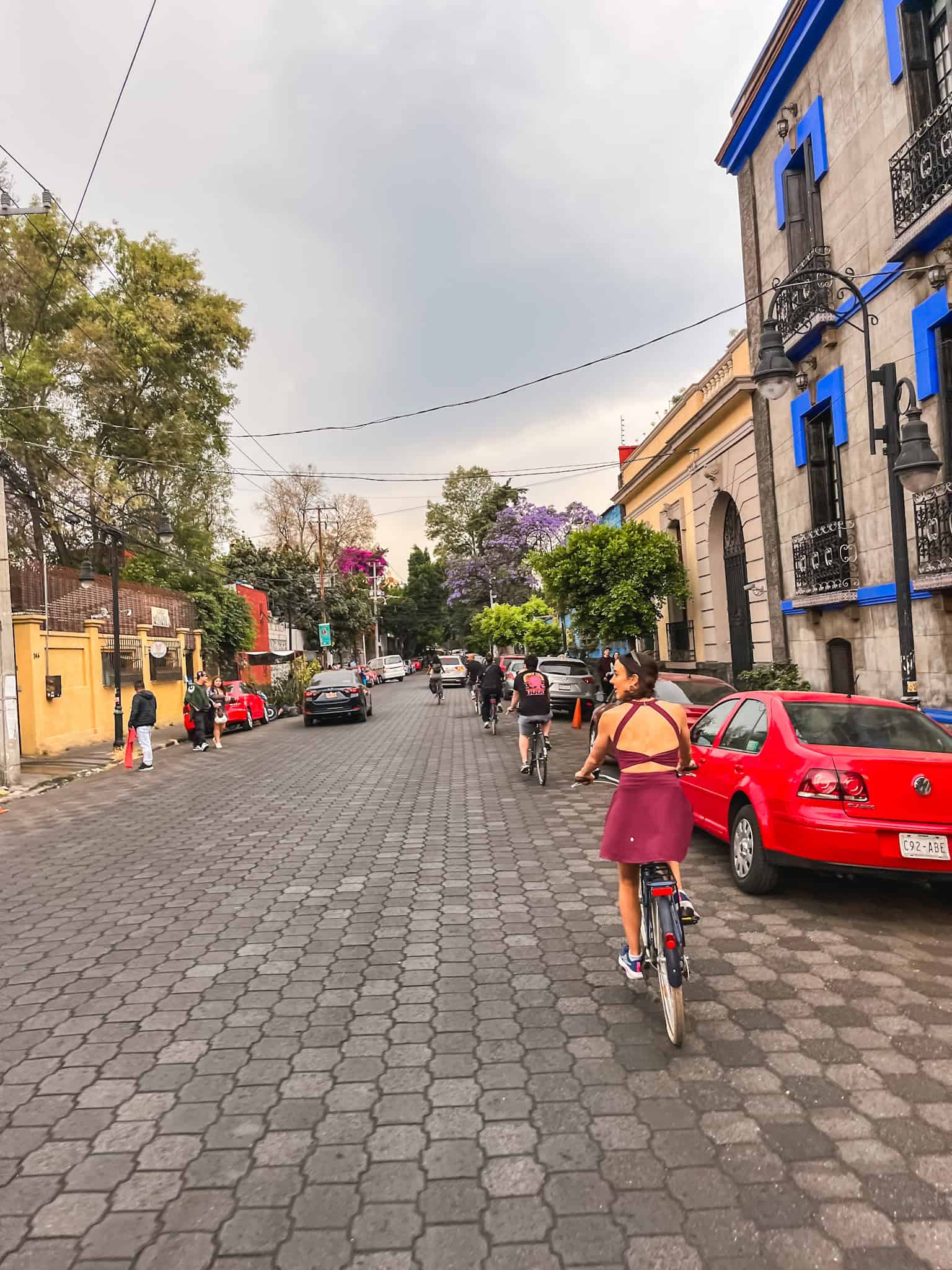
Both neighborhoods do their own slightly more local version of the celebrations, with artisan altars, markets, and traditional events. Coyoacán in particular has a great atmosphere around this time and is where you can find the Frida Kahlo museum.
I honestly love Coyoacán. It’s a beautiful neighborhood, full of restaurants, bars, and shops, and it’s outside of the typical tourist bubble. If you have more than 3 days, it’s worth a visit.
And if you want to combine Day of the Dead with a Xochimilco canal trip, the trajineras are decorated for the season and it’s pretty magical.
Mexico City Day of the Dead Tour
Personally, I love a guide in every city I go to and getting a local’s introduction to the history, the legends, why these celebrations are the way they are, it’s pretty awesome.
👉 This tour will take you through the main Zocalo area, the templo, and the very famous tile house, all while sharing the history and some spooky ghost stories to get you in the mood!
Where to Stay for Mexico City Day of the Dead (you NEED to Book Early)
Location really matters here if you want to enjoy the parade and main Zócalo celebrations without logistics stress. This is a popular time to visit CDMX so I’m not kidding when I say it will save you a boatload of money to book ahead.
I have a full guide on where to stay in Mexico City if you want to go deeper, but these are the best areas and hotels I’d recommend for Day of the Dead:
Roma / Roma Norte (My 1st Top Pick)
This is where I spend most of my time in CDMX and it’s the best base for almost any trip. Great metro access, walkable streets, excellent restaurants, and close enough to Reforma that the parade is very manageable.
The Brick Hotel is a beautiful boutique option here, central, well-located, and a lovely place to call home in Roma

Condesa (My 2nd Top Pick)
Right next door to Roma and basically the same deal. Slightly more residential, excellent restaurant scene, easy access to Reforma via metro or Uber.
Andaz Mexico City Condesa is honestly the hotel I recommend to almost everyone visiting CDMX. Rooftop pool, great bar, central location, and it’s part of Hyatt (hello, World of Hyatt points).

Centro Histórico / Zócalo
Staying here puts you right in the middle of everything. You’ll walk out your front door into the festival. The crowds are intense though, and Centro gets a bit gritty at night even outside of holiday season.
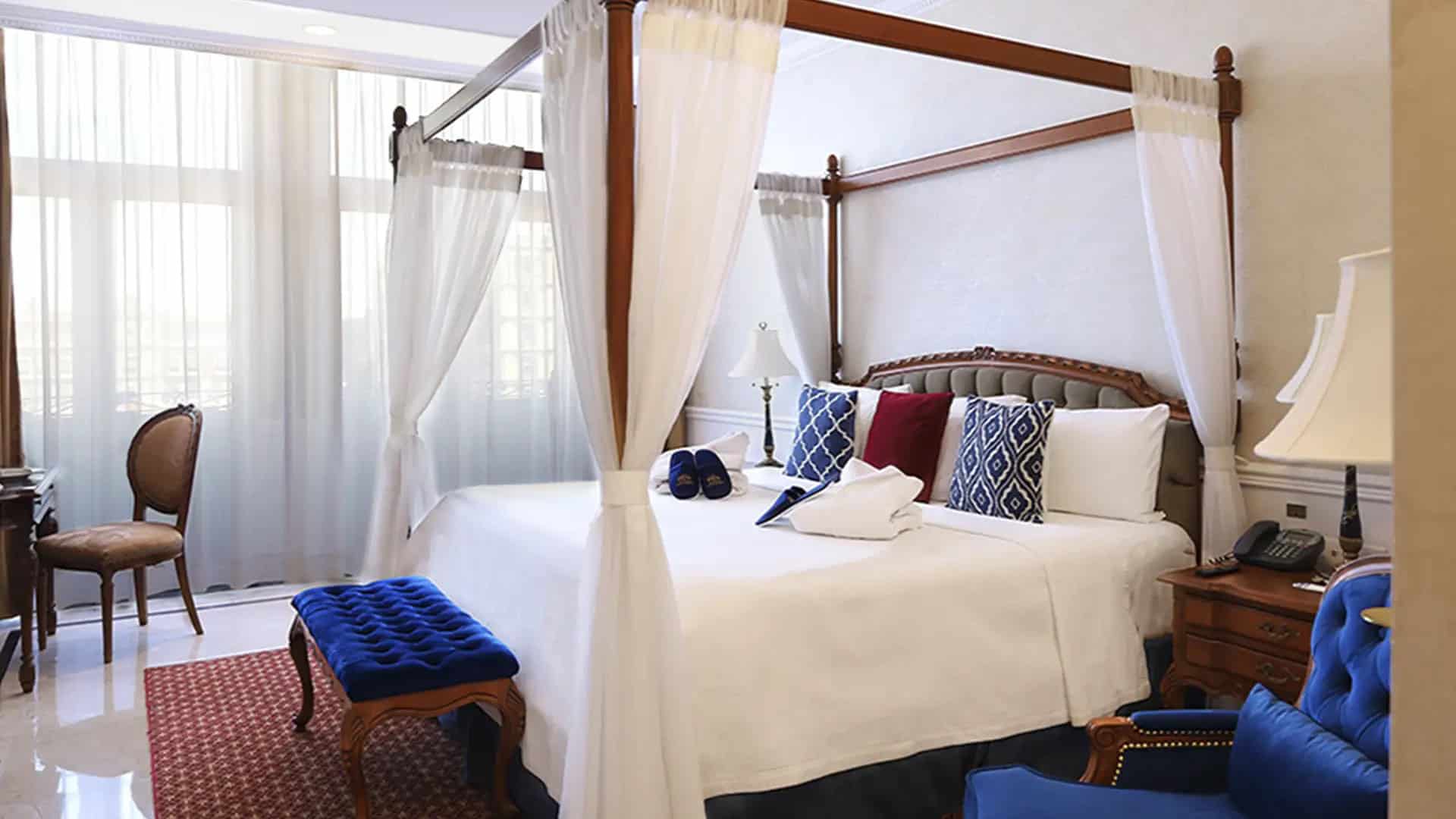
The Gran Hotel Ciudad de México overlooks the Zócalo directly and is super beautiful. The historic Art Nouveau interior alone is worth seeing, and for Day of the Dead you basically have front-row seats to the Ofrenda Monumental.
Reforma / Juárez Corridor
Great for parade logistics. You’re on the route, which means you can grab a coffee and walk down to claim your spot without figuring out transit while half the city is trying to do the same thing.
Mexico City Marriott Reforma is reliable, well-located, and good for Marriott Bonvoy points redemptions.

If you’re really going luxury, I just can’t recommend the St. Regis enough. It’s gorgeous and you get a butler (yes, you read that right).

💡 Pro tip: Seriously, book early! Centro Histórico and Reforma hotels sell out fast for Day of the Dead Mexico City. Don’t be the person trying to book two weeks out.
What to Eat During Mexico City Día de los Muertos
This section is important. The food during Day of the Dead in CDMX is one of the best parts, and there are a few things specific to this time of year you absolutely cannot skip. (I have a full guide to the best restaurants in Mexico City if you want to go deeper on the general food scene – it’s pretty incredible)
Pan de Muerto (Do Not Leave Without Eating This)
The first thing you’ll notice when Día de los Muertos season starts is pan de muerto appearing in every bakery window. It’s a gorgeous, fluffy sweet bread decorated with bone-shaped dough on top, and it is so, so good.
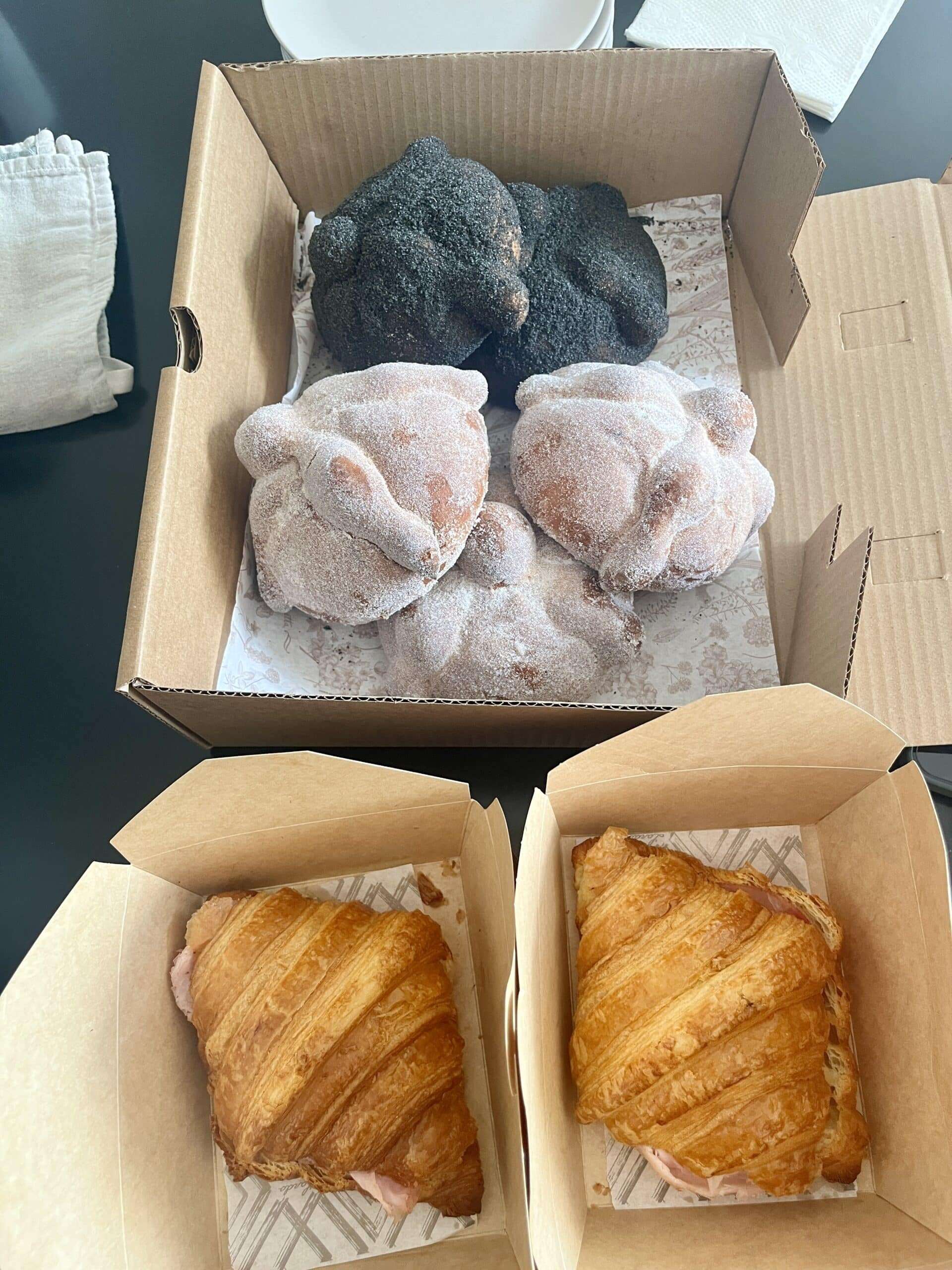
My recommendation is to pick up pastries from Lardo in Roma. They do a few versions, regular sugar or ash (yes, ash, and yes it’s delicious), and I think they even have an orange one. Get one of each and report back. I go back every single time I’m in CDMX for Day of the Dead. It’s become a little tradition at this point.
Atole
This is warm, thick drink made from corn dough, usually flavored with chocolate, vanilla, or fruit. It’s the traditional pairing with pan de muerto and exactly what you want when you’re standing outside watching the city celebrate. Street vendors sell it everywhere during the festival.
Esquites
Esquites (corn kernels) are year-round in Mexico City, but they’re everywhere during the festival, especially near late-night events and street celebrations. The ones from street vendors mixed with ramen (yes, instant ramen) are my favorite.
Mole
Mole is always on the menu in CDMX, but Day of the Dead is one of the most traditional times to eat it. Mole negro (the dark, complex one with chilies and chocolate) even shows up on ofrendas as an offering to the departed. You can order it at almost any restaurant in CDMX.
Sugar Skulls (Calaveras)
More of a treat than a meal, but you’ll see intricate sugar skull decorations at markets and street stalls throughout the festival. They’re part of the ofrenda tradition but plenty of vendors sell them as sweets and souvenirs too.
If you want a proper introduction to the food scene beyond the festival-specific stuff, a food tour on your first day is a really smart move. The guides will point out all the seasonal things you’d otherwise miss.
What Else to Do in Mexico City
If you’re spending a few days in CDMX around the festival (and you should be!), here are some things worth adding:
- Frida Kahlo Museum: The Blue House in Coyoacán is one of the most fascinating museums I’ve been to anywhere. Book your tickets in advance because it sells out.
- Lucha Libre: Just trust me on this one. I know it sounds touristy but it’s genuinely one of the most fun nights you can have in this city. Full guide here.
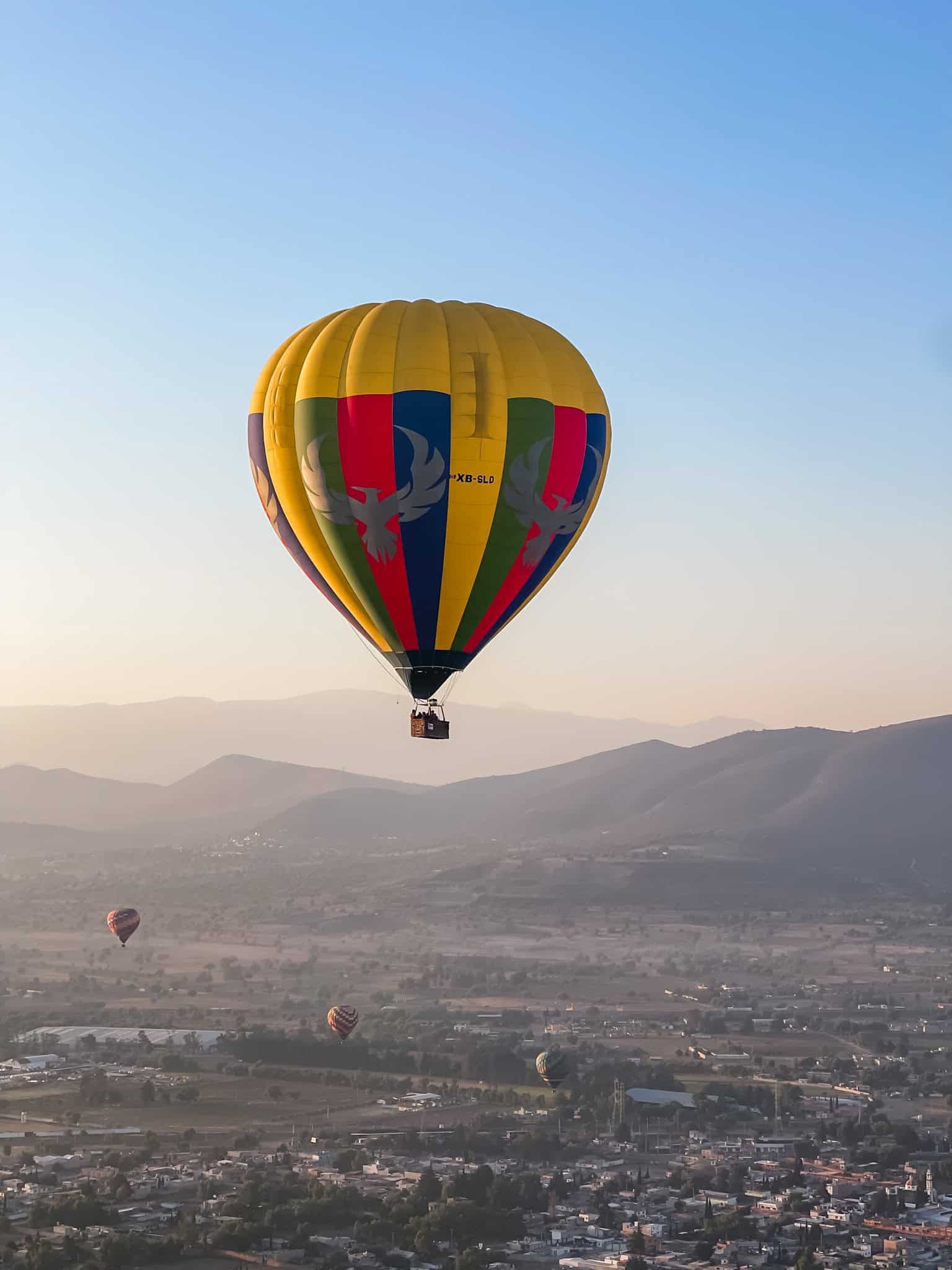
- Pyramid Tour: Teotihuacan is about an hour outside the city and breathtaking (especially if you do it via hot air balloon!). Get there early. Full guide here.
- Xochimilco: Especially great around Day of the Dead when the trajineras are all decorated. Guide here.
Mexico City vs Oaxaca for Day of the Dead
Alright, let’s be honest about this one.
I love Mexico City deeply (obviously, I live there part of the year). And Mexico City Día de los Muertos is genuinely spectacular. The enormous parade and city-wide celebrations that are hard to beat.
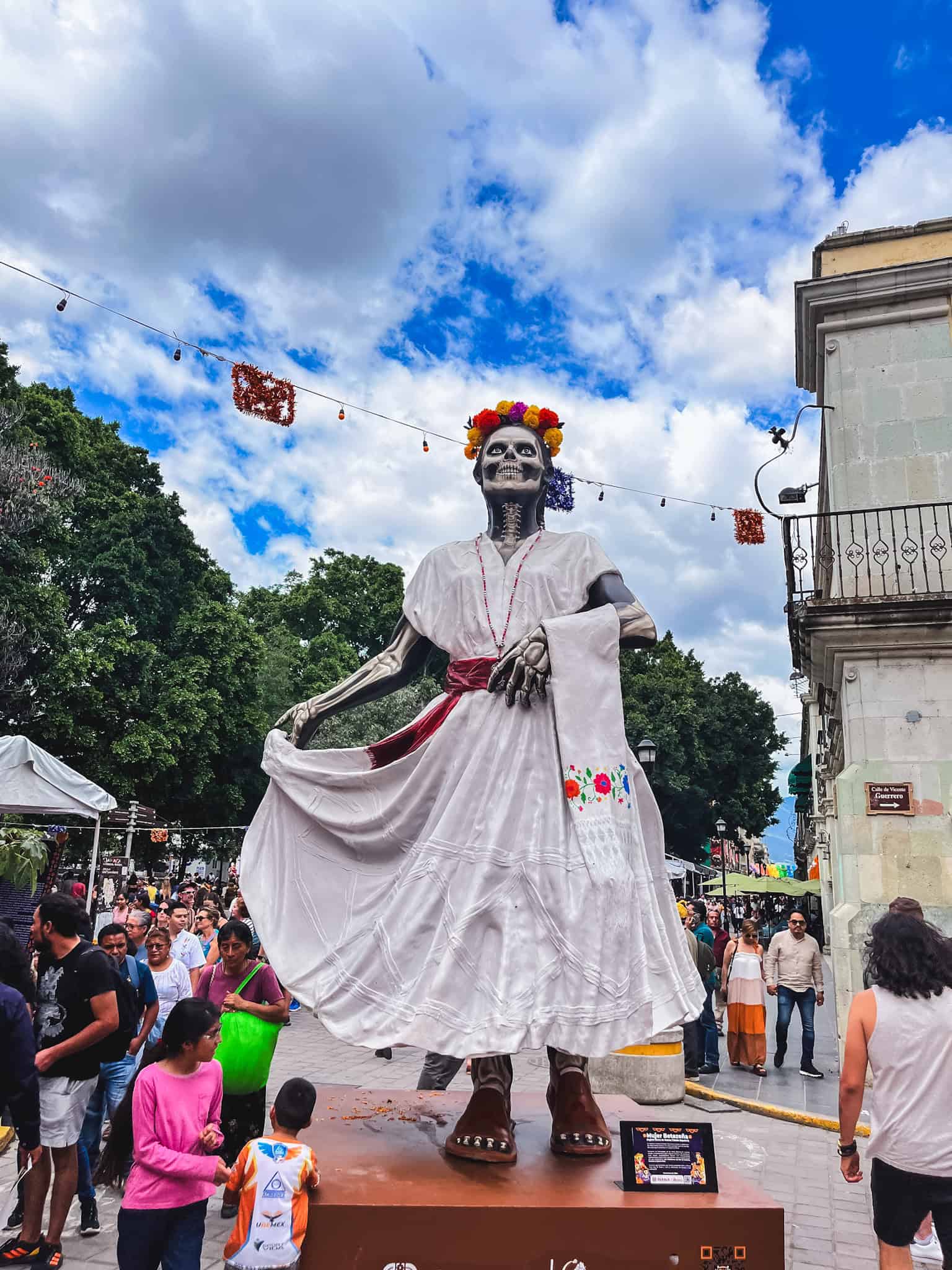
Buuuut Oaxaca is the spiritual home of Día de los Muertos and it’s where most of the celebration is. It feels more immersive, more personal, and more connected to what the holiday is actually about. The parade in CDMX might be bigger, but Oaxaca is richer.
That said, CDMX is in no way shape or form a consolation prize. The Grand Parade alone is worth the trip, and experiencing it is a genuine celebration of Mexican culture. And if you’ve already been to Oaxaca, or if Mexico City just fits your trip better, you will have an incredible time.
Don’t sweat it! Just go and enjoy 🙂
If you’re choosing specifically for Day of the Dead: Oaxaca. If you’re already going to CDMX or want a big city experience with the festival as a highlight: Mexico City is fantastic. (I have a full guide to Day of the Dead in Oaxaca if you want to compare.)
Mistakes Tourists Make: Tips and Tricks for Mexico City Day of the Dead
Get There Early for the Parade
My first time, I didn’t get there early enough and spent the parade enjoying the energy rather than actually seeing it well. Learn from me. The crowds along Reforma get genuinely packed so get there at least 90 minutes early, bring water, and enjoy the build-up. There’s always plenty to watch before the floats start rolling.
Make Restaurant Reservations
CDMX is a reservation city in general, but around Day of the Dead it’s even more important. The spots along Reforma and in Centro fill up fast on parade days. Book at least a few days out, ideally a week. My favorites are all on the free Google map below:
Plan for Road Closures & Some Serious Traffic
The parade route closes down large sections of the city. Check the route in advance, map out how you’re getting around, and consider staying somewhere within walking distance of your main events. Uber works great in Mexico City but expect surge pricing and slower pickup times during the festival. If you’re going to Zocalo, consider the metro.
Watch Coco First
1000% recommend this. Watch it a few days before your trip. It gave me so much context and appreciation for everything I was seeing when I actually got there, and it’s just a great movie.
Bring Cash
Street vendors, face paint artists, food stalls. Most are cash only. Bring small bills in pesos. ATMs are easy to find but avoid using them in isolated areas at night.
Safety
Mexico City is very safe for tourists in the main neighborhoods. During Day of the Dead, Centro gets extra crowded, so keep valuables in a front pocket or a bag (like the ones here) you can hold against your body in tight spaces. For a full breakdown, check out my guide on safety in Mexico City.
FAQs: Mexico City Día de los Muertos
The main celebrations are November 1 and 2, 2026. The Grand Parade is scheduled for November 1. Festival events and exhibitions typically begin the last weekend of October. There are also plenty of ways to celebrate day of the dead across the city in the days surrounding the main events.
Visit Mexico (visitmexico.com) is the official tourism site where confirmed parade details get published. Exact dates are typically announced closer to the event, so check back in late summer or early fall if you’re planning ahead.
Absolutely – no question. The parade on Paseo de la Reforma is one of the most spectacular public events in Mexico, and the Ofrenda Monumental at the Zócalo is genuinely stunning. If you’re visiting CDMX around this time, 100% plan around it.
The parade starts near Puerta de los Leones in Chapultepec Park, travels along Paseo de la Reforma, continues to Avenida Juárez, and ends in the Zócalo. Reforma is the best viewing spot.
Oaxaca is the traditional home of Día de los Muertos and the experience there feels more immersive. Mexico City’s Grand Parade is enormous and the celebrations are incredible. If you can only pick one specifically for the festival, go Oaxaca. If you’re already doing CDMX, you won’t be disappointed.
Roma/Condesa is the best all-around base with great access to the parade route. The Andaz Mexico City Condesa is my top all-around hotel pick. For maximum proximity to the main events, Centro Histórico or the Reforma corridor puts you right in the action.
Yes – I have always felt incredibly safe in CDMX. The tourist areas of Mexico City are very safe, and the festival brings an incredible amount of positive energy to the city. The main thing to watch for is pickpocketing in dense crowds, especially in Centro. My full Mexico City safety guide has everything you need to know.
Absolutely, and you are very welcome! Day of the Dead in Mexico City is a public celebration and tourists from all over the world attend every year. The main events like the Grand Parade and the Ofrenda Monumental at the Zócalo are completely open to everyone. The one thing to keep in mind is that cemetery visits are personal family moments, so approach those with respect and ideally go with a guide. But the festival itself? Show up, get your face painted, eat the pan de muerto. You’re invited.
Mexico City Day of the Dead: Final Thoughts
What I didn’t expect my first time was how subtle it starts and how all-consuming it becomes. One day you’re noticing pan de muerto in bakery windows and a little ofrenda at your coworking space. Then suddenly you’re standing in front of the Ofrenda Monumental at the Zócalo with thousands of other people and you completely understand why this holiday is one of the most meaningful things Mexico shares with the world.
Mexico City Día de los Muertos is not Halloween. It’s not spooky. It’s a genuine celebration of life, family, and the people who came before us. And it is absolutely worth building a trip around.
For more help planning your time in CDMX, my 4-day Mexico City itinerary is a great starting point, and my guide to what to do in Mexico City has everything else you’ll need.
Cheers to your next adventure 💀🇲🇽


